Poster
Improvements in variant calling sensitivity and specificity in single-cell DNA sequencing using deep learning
Through single-cell sequencing technologies, it is now possible to interrogate thousands of cells in a single experiment for genetic variability. Single-cell DNA platforms like Tapestri are still susceptible to errors from polymerase incorporations, structure-induced template switching, PCR mediated recombination in the workflow, or DNA-damage. Errors from sequencing could propagate from cluster amplification, cycle sequencing, or image analysis. Altogether, these errors can be divided into substitutions, insertions, and deletion errors, which range from 0.5% to 2%, depending on the sequencer. This makes rare variant and minimal residual disease detection challenging. To address these challenges, deep learning models have been developed to correct the errors, reduce false-positive rates, and predict true variants.
SHARE THIS PAGE
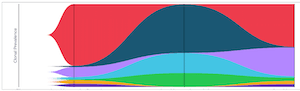
Single-cell multiomic clonal tracking in myeloma identifies SMM clones that progress to MM and low frequency MM clones with resistance features enabling more precise application of targeted therapies
Adam Sciambi
EHA (2024)
Single-Cell MRD Assessment in AML Reveals Clonal Diversity and Genotype–Phenotype Discordance Missed by Bulk Methods
Adam Sciambi, Daniel Mendoza, Kathryn Thompson, Lan W. Beppu, Benjamin Geller, Indira Krishnan, Lubna Nousheen, Shu Wang, Charlie Murphy, Jerald P. Radich, and Todd E. Druley
(2025)
Comprehensive On-and Off-target Confirmation Using Integrated rhAmpSeq and Targeted DNA Sequencing Single-Cell Technology
Indira Krishnan, Shu Wang, Saurabh Gulati
ASGCT 2025 (2025)
High Throughput Single-cell Assessment of Genome Integrity and Toxicity Events Associated With Edited Cells
Chieh-Yuan (Alex) Li; Saurabh Parikh; Saurabh Gulati; Donjo Ban; Nechama Kalter; Michael Rosenburg; Qawer Ayaz; Joanne Nguyen; Benjamin Miltz; Yang Li1; Madhumita Shrikhande; Edward Szekeres; Ayal Hendel; Benjamin Schroeder; Shu Wang
ESGCT 2024 (2024)