Poster
Leveraging Single-cell DNA Sequencing for In-depth Characterization of Cell and Gene Therapies
CRISPR is a powerful tool for the development of novel cell and gene therapies. Despite its ability to precisely alter the genome, CRISPR can yield off-target edits and rare chromosomal alterations that can impact the safety and efficacy of therapeutic agents. For this reason, protocol optimization and in-depth characterization are critical to successfully bringing new products to market. Conventional sequencing technologies that analyze CRISPR-edited cells often report bulk measurements, an approach that fails to measure the zygosity and co-occurrence of alterations within individual cells. Analysis of clonal populations provides this information but can add weeks to experimental timelines. In this poster, we demonstrate that single-cell DNA sequencing on Mission Bio’s Tapestri Platform provides sensitive and nuanced quantification of genetic edits made to up to 10,000 individual cells with a simple workflow
SHARE THIS PAGE
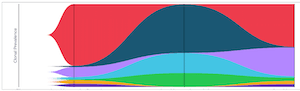
Single-cell multiomic clonal tracking in myeloma identifies SMM clones that progress to MM and low frequency MM clones with resistance features enabling more precise application of targeted therapies
Adam Sciambi
EHA (2024)
Single-Cell MRD Assessment in AML Reveals Clonal Diversity and Genotype–Phenotype Discordance Missed by Bulk Methods
Adam Sciambi, Daniel Mendoza, Kathryn Thompson, Lan W. Beppu, Benjamin Geller, Indira Krishnan, Lubna Nousheen, Shu Wang, Charlie Murphy, Jerald P. Radich, and Todd E. Druley
(2025)
Comprehensive On-and Off-target Confirmation Using Integrated rhAmpSeq and Targeted DNA Sequencing Single-Cell Technology
Indira Krishnan, Shu Wang, Saurabh Gulati
ASGCT 2025 (2025)
High Throughput Single-cell Assessment of Genome Integrity and Toxicity Events Associated With Edited Cells
Chieh-Yuan (Alex) Li; Saurabh Parikh; Saurabh Gulati; Donjo Ban; Nechama Kalter; Michael Rosenburg; Qawer Ayaz; Joanne Nguyen; Benjamin Miltz; Yang Li1; Madhumita Shrikhande; Edward Szekeres; Ayal Hendel; Benjamin Schroeder; Shu Wang
ESGCT 2024 (2024)