Poster
A Multiomic, Single-Cell Measurable Residual Disease (scMRD) Assay For Phasing DNA Mutations and Surface Immunophenotypes
The small population of cancerous cells that remain following treatment, known as measurable residual disease (MRD), is the major cause of relapse in acute myeloid leukemia (AML). Usually, these refractory cells have gained additional resistance mutations or changed their surface immunophenotypes in ways that preclude detection and phasing by current gold standard flow cytometry or bulk next-generation sequencing assays. For this reason, a multiomic single-cell MRD (scMRD) assay could offer a more comprehensive indicator of relapse and the potential for faster response. Here, we present a new scMRD assay with a 0.01% limit of detection that provides single-cell clonal architecture and immunophenotyping to not only identify residual leukemia cells, but also identify putative DNA or protein targets for salvage therapy. By combining high sensitivity with multiomics, this assay provides researchers with comprehensive and clinically actionable insights into AML MRD.
SHARE THIS PAGE
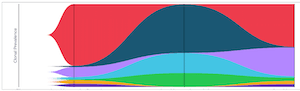
Single-cell multiomic clonal tracking in myeloma identifies SMM clones that progress to MM and low frequency MM clones with resistance features enabling more precise application of targeted therapies
Adam Sciambi
EHA (2024)
Single-Cell MRD Assessment in AML Reveals Clonal Diversity and Genotype–Phenotype Discordance Missed by Bulk Methods
Adam Sciambi, Daniel Mendoza, Kathryn Thompson, Lan W. Beppu, Benjamin Geller, Indira Krishnan, Lubna Nousheen, Shu Wang, Charlie Murphy, Jerald P. Radich, and Todd E. Druley
(2025)
Comprehensive On-and Off-target Confirmation Using Integrated rhAmpSeq and Targeted DNA Sequencing Single-Cell Technology
Indira Krishnan, Shu Wang, Saurabh Gulati
ASGCT 2025 (2025)
High Throughput Single-cell Assessment of Genome Integrity and Toxicity Events Associated With Edited Cells
Chieh-Yuan (Alex) Li; Saurabh Parikh; Saurabh Gulati; Donjo Ban; Nechama Kalter; Michael Rosenburg; Qawer Ayaz; Joanne Nguyen; Benjamin Miltz; Yang Li1; Madhumita Shrikhande; Edward Szekeres; Ayal Hendel; Benjamin Schroeder; Shu Wang
ESGCT 2024 (2024)